
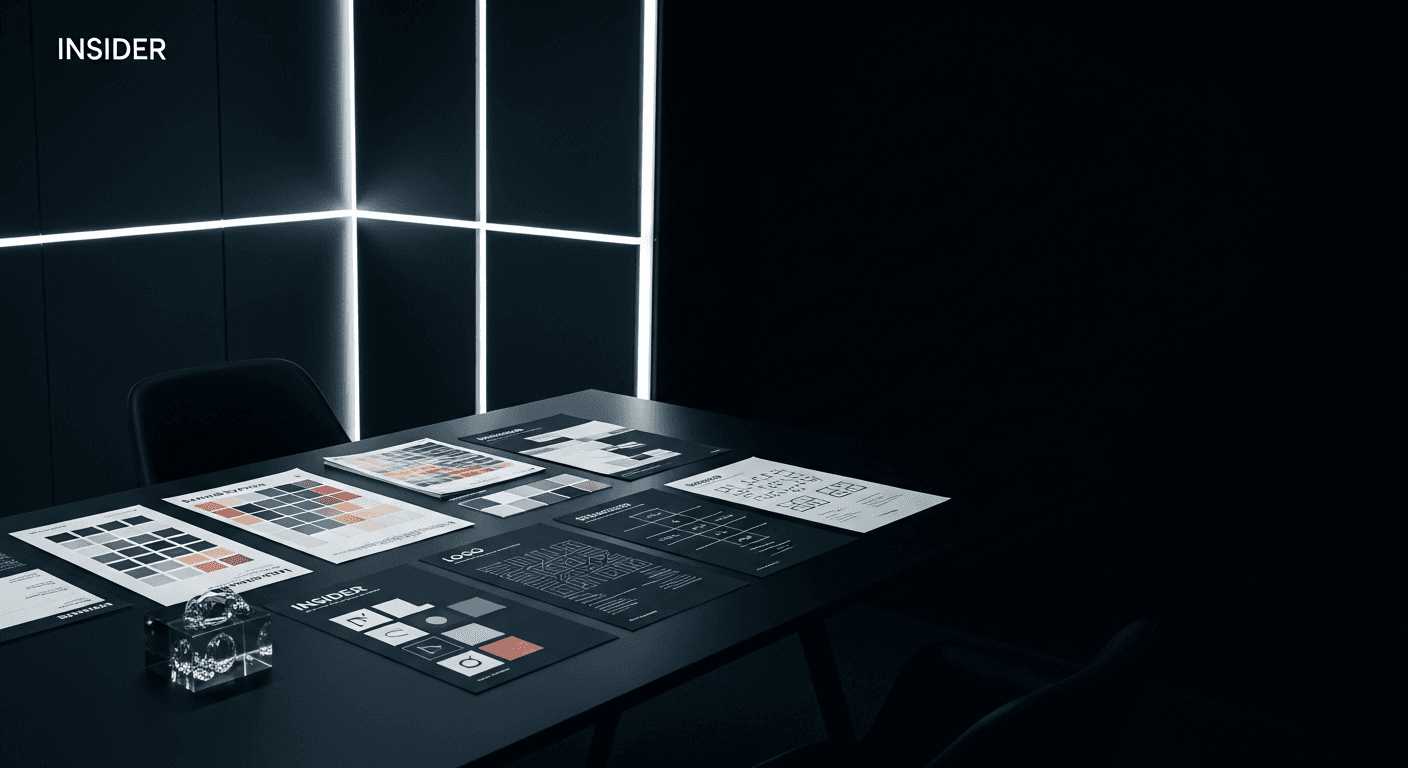
Designing Brand Systems That Survive Contact With Reality
Why most brand guidelines gather dust
Every agency has shipped a beautiful 80-page brand guideline that was opened twice and never touched again. The problem usually isn't the design work — it's that the system was built for a presentation deck, not for the messy, fast-moving reality of a marketing team shipping fifteen assets a week.
At Diginsider, we've started treating brand systems less like static documents and more like living products. That means versioning them, testing them against real briefs before launch, and building in the flexibility to bend without breaking.
Build for the intern, not the founder
A brand system succeeds or fails based on how well it performs in the hands of the least experienced person who'll ever touch it. If a junior designer can't confidently build a social carousel from your component library, the system has a gap — no matter how elegant it looks in Figma.
That's why we stress-test every system with real, low-context scenarios: a last-minute event banner, a partner co-branding request, a translated landing page. If the system holds up there, it'll hold up everywhere.
Flexibility is a feature, not a flaw
Rigid systems feel safe in a pitch but crumble the moment a client needs something the deck didn't anticipate. We design in deliberate "give" — modular type scales, adaptive color roles, layout grids that flex across formats — so teams can respond to new contexts without breaking the brand's core identity.
The result is a system that earns its keep long after the kickoff meeting: one that a growing team can actually live inside, day after day, campaign after campaign.
More from the journal

Case Study
What Clients Mean When They Say "Make It Pop"
The phrase that makes every designer's stomach drop "Can you make it pop?" might be the most-dreaded sentence in client feedback — vague enough to mean almost anything, specific enough to feel like a ...

Guide
A Content Calendar That Survives Contact With a Real Week
Most calendars are built for an ideal version of the team Every content calendar we've inherited from a client looked great on the day it was built — color-coded, evenly spaced, optimistic. And every ...